Skip to content

Surgery

At Three Counties Equine Hospital we provide the full spectrum of equine surgery—from minimally invasive procedures to complex emergency operations—delivered by an experienced team working in purpose‑built facilities.

Your horse’s safety, comfort and long‑term soundness are at the heart of everything we do, and we partner closely with your primary veterinarian to ensure seamless care before, during and after surgery.
What we do

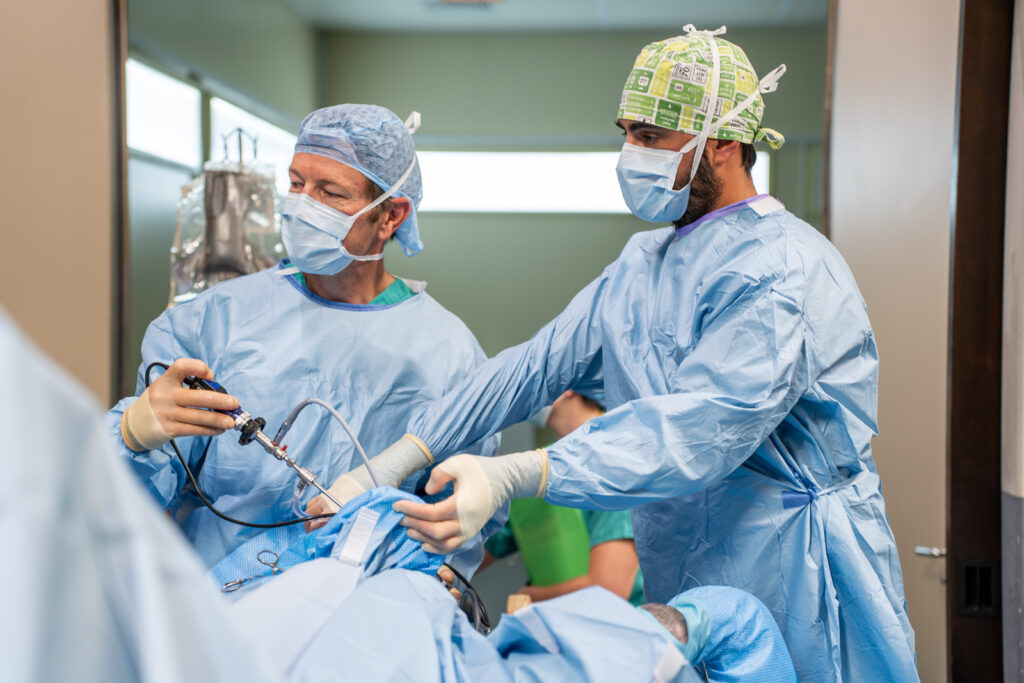
Our surgeons manage elective and emergency cases across orthopaedics and soft‑tissue surgery, including arthroscopy/tenoscopy/bursoscopy, colic (abdominal) surgery, fracture repair, upper airway (“wind”) procedures, reproductive and urogenital surgery, and wound reconstruction.

Where appropriate, we also offer advanced laser techniques (for example, for selected sarcoids and airway conditions) to remove abnormal tissue precisely.
Patient safety and anaesthesia

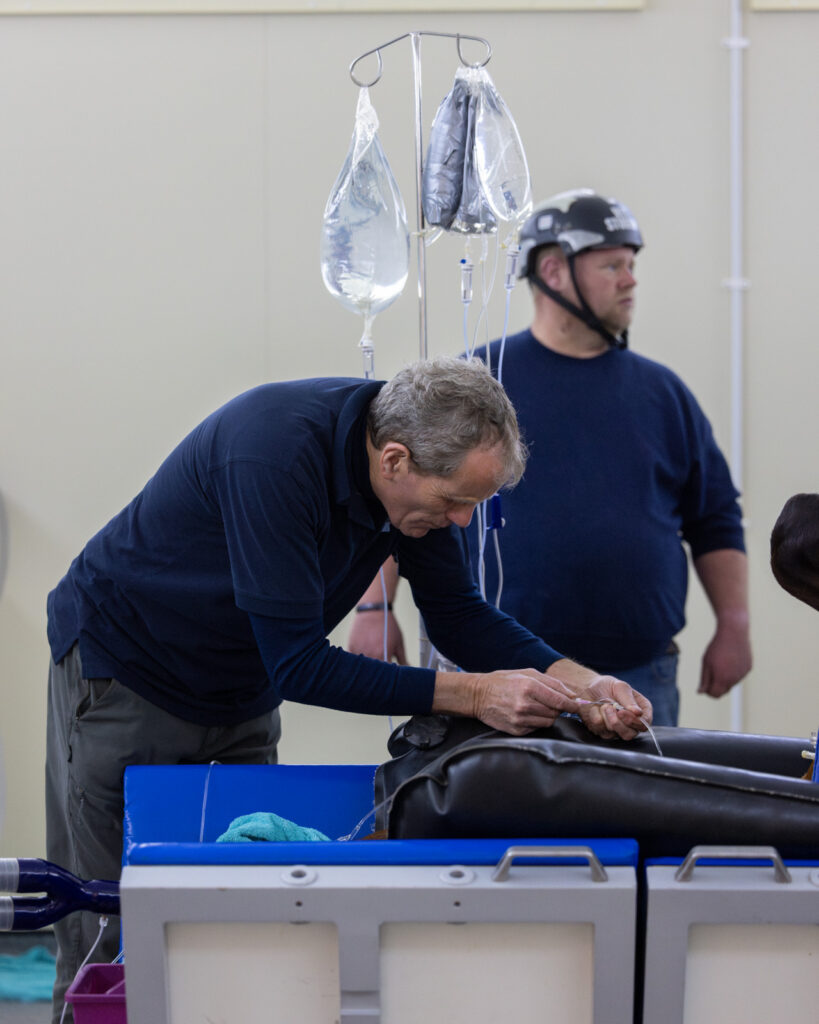
Every horse receives an individualised anaesthesia and analgesia plan. Theatre cases benefit from modern monitoring (e.g., ECG, capnography and blood‑pressure monitoring) and assisted, padded recoveries overseen by trained personnel —approaches used by major referral centres to support a safe induction and recovery. For suitable cases, we recommend standing surgery under sedation and local anaesthesia to avoid general anaesthetic risks and often shorten recovery.

Standing surgery

Thanks to advances in sedation, local and regional anaesthesia, and minimally invasive technique, many operations can be performed with the horse standing and comfortable. Typical examples include complex dental and sinus procedures, selected back procedures (e.g., appropriate “kissing spines” cases), soft‑tissue and reproductive surgeries, and laser treatment of specific airway problems, and selected distal limb fracture fixation procedures where this approach is safe and advantageous.. In addition, selected fracture repairs can be undertaken standing where this approach is safe and advantageous.

The standing approach avoids general anaesthetic risk, can reduce overall recovery time, and is often better tolerated by suitable patients. Case selection is critical: our surgeons assess temperament, imaging findings and the location and configuration of the fracture to determine whether standing repair is appropriate and will recommend general anaesthesia when it offers a safer or more predictable outcome.

Facilities and technology

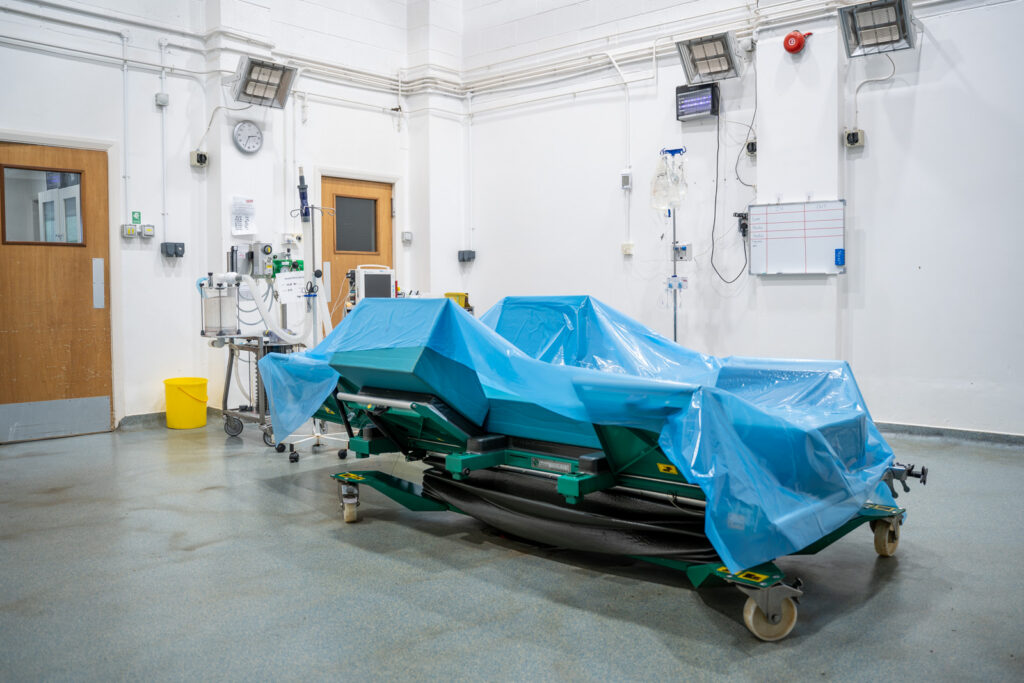
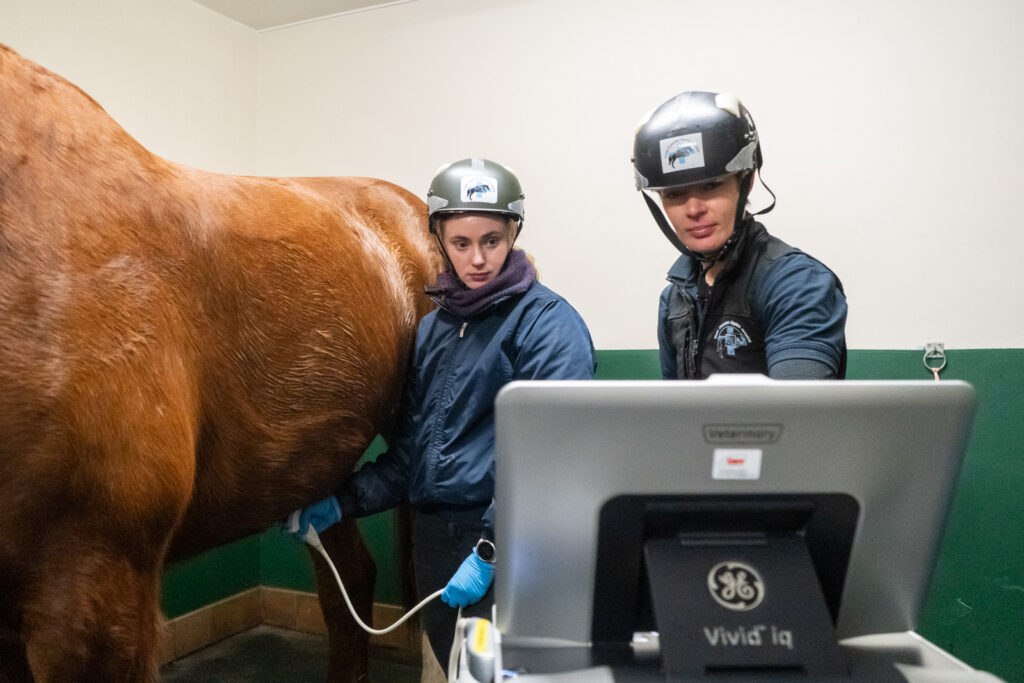
Our surgical unit mirrors the layout and workflows you’d expect in a leading referral hospital: sterile theatre for orthopaedic and soft‑tissue surgery, separate induction and recovery areas, and dedicated spaces for standing procedures. We integrate advanced imaging (digital radiography and ultrasound, with referral‑level access to MRI/scintigraphy when indicated) to plan precisely and guide treatment.

Minimally invasive expertise

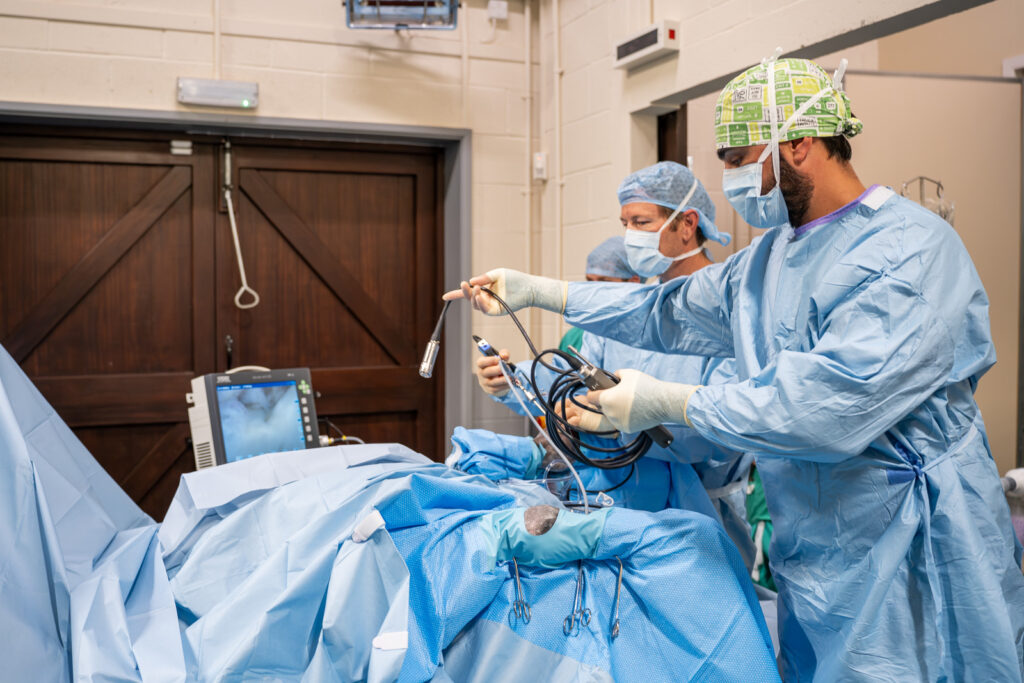
Wherever possible, we treat joints, tendon sheaths and bursae using keyhole techniques (arthroscopy, tenoscopy, bursoscopy). These methods are standard of care at high‑volume centres because they minimise tissue trauma, reduce infection risk and can speed return to work compared with traditional open procedures.

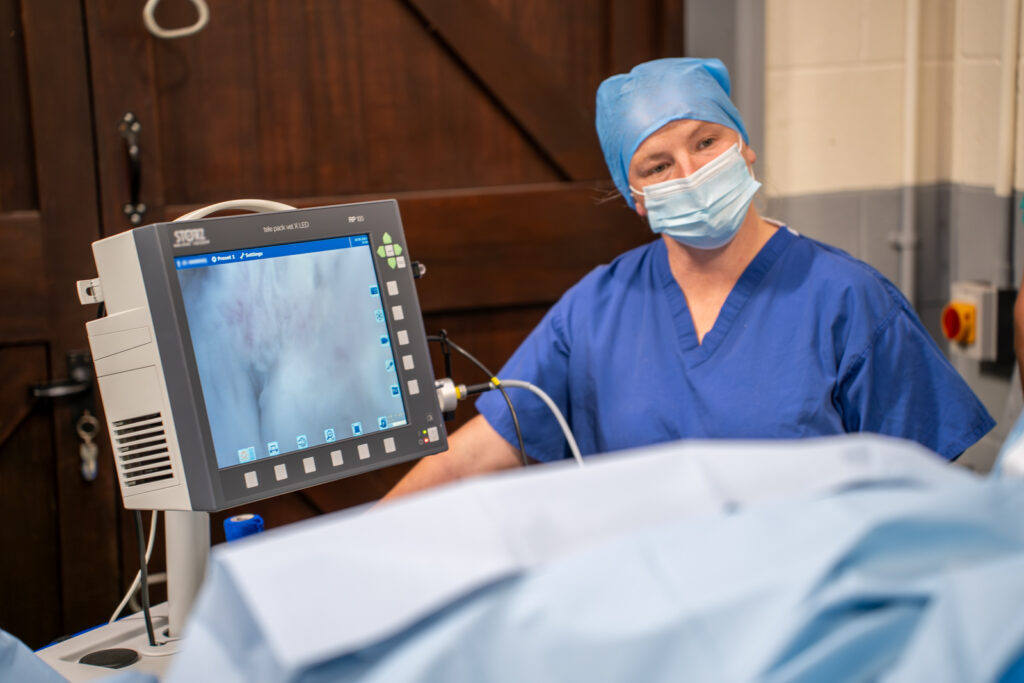
For carefully selected cases, we also perform laparoscopic (keyhole) procedures—often standing under sedation and local/regional anaesthesia—to diagnose and treat conditions within the abdomen with minimal tissue trauma. Typical indications include ovariectomy, management of abdominally retained testicles (cryptorchidectomy), evaluation and biopsy of abdominal organs, treatment of selected hernias, and preventative or corrective procedures such as closure of the nephrosplenic space in horses predisposed to left dorsal displacement.

Laparoscopy uses small flank portals and a camera to provide excellent visualisation, which can mean smaller incisions, less post‑operative discomfort, reduced infection risk and a faster return to work compared with traditional open surgery. Case selection is key; our surgeons will advise whether a standing laparoscopic approach or general anaesthesia offers the safest and most predictable outcome for your horse.

Colic surgery—24/7 readiness

Colic is the most common surgical emergency in horses. Our team is prepared around the clock to triage, stabilise and operate when surgery offers the best outcome. It is well established that prompt decision‑making and specialist peri‑operative care have transformed survival and return‑to‑work rates in recent years; our protocols reflect those best practices.

Aftercare and rehabilitation

Successful surgery is only the beginning. Your horse benefits from dedicated in‑patient nursing, tailored pain relief and bandage/wound management, followed by a clear written rehabilitation plan. We schedule rechecks and liaise with your farrier, physio and referring vet so that controlled exercise, turnout and return to ridden work progress safely. This joined‑up model is how large hospitals maintain continuity of care beyond discharge.

Working with your vet

We welcome referrals from across the region and beyond and keep both owners and referring veterinarians fully informed at each step—from pre‑operative planning and estimates to post‑operative updates and long‑term management. We are proud of our collaborative approach and helps ensure the best possible outcomes.

Have a question or a case to discuss?

Please contact the hospital and our surgery team will be happy to talk through options, expected timelines and costs, and arrange an appointment at your convenience.