Dentistry
Healthy teeth are essential for equine comfort, performance and long‑term wellbeing.
Our Dentistry
Our dentistry service ranges from routine preventive care to advanced diagnostics and oral surgery, delivered by experienced clinicians with access to specialist imaging and an operating theatre when required. Most patients benefit from a comprehensive dental examination at least once a year; younger horses, seniors, and those with a dental history may need more frequent reviews.
A safer, calmer experience
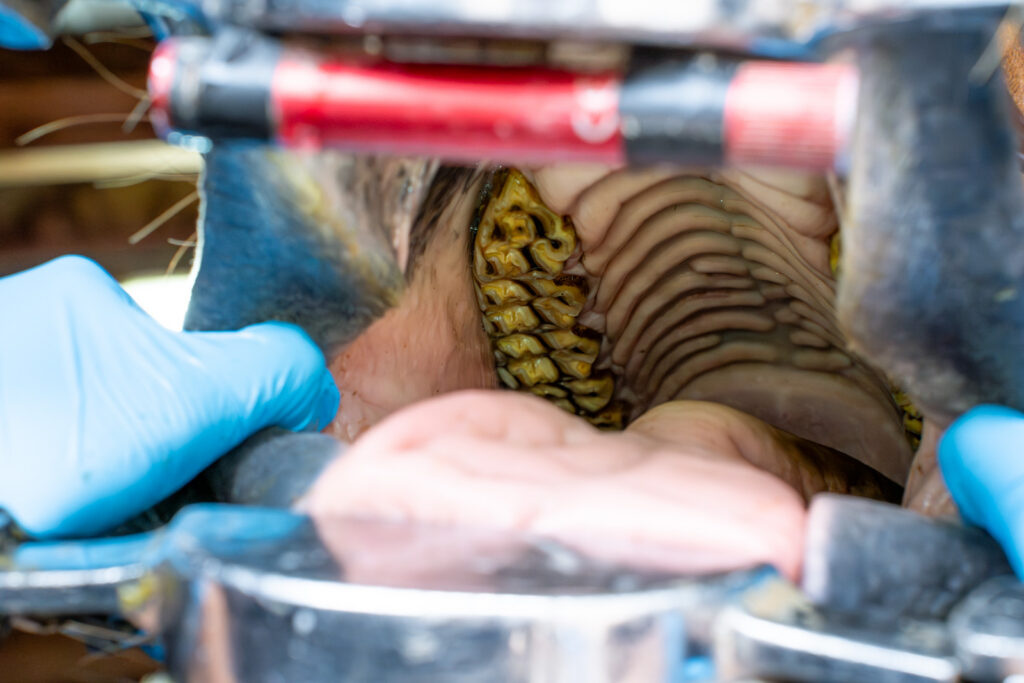
We routinely use standing sedation and local/regional anaesthesia to keep examinations and treatments safe, thorough and low‑stress. This allows a meticulous oral assessment with a full‑mouth speculum, motorised and hand instruments, and—when indicated—nerve blocks for analgesia.
- Advanced diagnostics (on‑site)
- Minimally invasive expertise
- Diastemata & periodontal disease
- Restorative dentistry & endodontics
- Extractions
- Sinus surgery & fracture repair
Advanced diagnostics (on‑site)
· High‑quality dental radiography is used to assess cheek teeth and incisors for apical infection, fractures, root resorption and supernumerary teeth; our team can augment films with radiopaque probes/markers to map draining tracts and sinus communications when needed.
· Oral endoscopy (oroscopy) provides magnified, high‑definition views of occlusal surfaces and the periodontium, improving detection of diastemata, caries and cracks that can be missed on a visual exam alone. The small‑diameter scope is well tolerated but requires sedation to protect delicate optics.
Minimally invasive expertise
Our default is a keyhole, tissue‑sparing approach wherever it offers equal or better outcomes: precise occlusal adjustments, targeted lavage/debridement, and endoscope‑guided treatments are used to treat disease while preserving healthy structures
Diastemata & periodontal disease
Diastemata (gaps between cheek teeth) trap feed, drive periodontal inflammation and can be very painful; common signs include quidding, slow eating and malodour. Management ranges from meticulous cleaning and packing to mechanical widening of the space so food can escape—techniques shown to relieve pain and reduce disease progression in appropriately selected cases. Case selection, cooling and controlled burring angles are critical to minimise pulp risks.
Restorative dentistry & endodontics
Early infundibular caries can be cleaned and restored (filled) to support tooth integrity and reduce the risk of midline fractures; we also offer vital pulp therapy and root‑canal treatments for suitable incisors and selected cheek teeth.
Extractions—oral first, minimally invasive when needed
When a tooth must be removed, we follow the evidence‑based sequence:
· Standing oral extraction whenever feasible—this method carries the lowest overall complication rate compared with more invasive techniques.
· If oral purchase is limited (e.g., fractured crown), we consider Minimally‑invasive Transbuccal Extraction (MTE) under standing sedation. Using a small cannula through the cheek provides straight‑line access for screws and elevators, improving leverage while reducing morbidity compared with traditional repulsion or wide buccotomy.
· In specific, difficult cases we may use tooth sectioning to divide and remove multi‑rooted teeth piece‑by‑piece—a contemporary alternative that has demonstrated good success with manageable complication rates when planned with oroscopy and imaging.
Standard repulsion approaches are now reserved for select indications due to higher rates of sinusitis, orosinus fistula and adjacent‑tooth damage reported in comparative studies; modern techniques aim to avoid these complications wherever possible.
Sinus surgery & fracture repair
Dental disease and the paranasal sinuses are closely linked. Working from advanced imaging, we perform targeted sinus lavage or surgery and stabilise facial fractures.
What to expect
· Consultation & planning: We review history, perform a sedated oral exam with oroscopy as needed, and discuss findings, options, likely outcomes and costs.
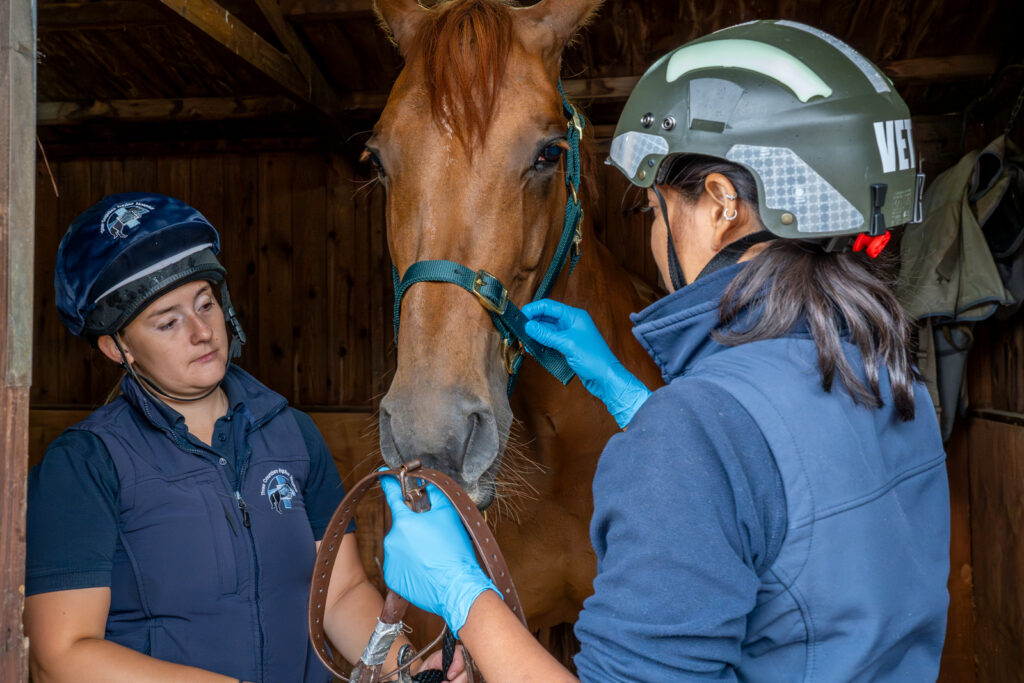
· During treatment: Standing sedation, local anaesthesia and gentle handling are used to maintain safety and comfort; owners receive same‑day updates and media where helpful.
· Aftercare & rehabilitation: You’ll receive written instructions (feeding, analgesia, mouth rinses, re‑checks). For extraction and diastema cases we schedule follow‑ups to monitor healing and adjust packing or widening if indicated.
Why choose us?
· Referral‑level capability with standing sedation protocols, advanced imaging and endoscope‑guided treatments.
· Modern, minimally invasive extraction pathways (oral → MTE → sectioning), designed to reduce complications and shorten recovery whenever case selection allows.
· Collaboration with your primary vet, clear reports and practical aftercare plans so your horse returns to comfortable eating—and work—sooner.
Questions or referrals?
Our dentistry team is happy to discuss cases, provide estimates and schedule appointments at short notice.