Orthopaedic treatments and regenerative medicine
We offer a wide range of equine orthopaedic therapies.
Stem cells
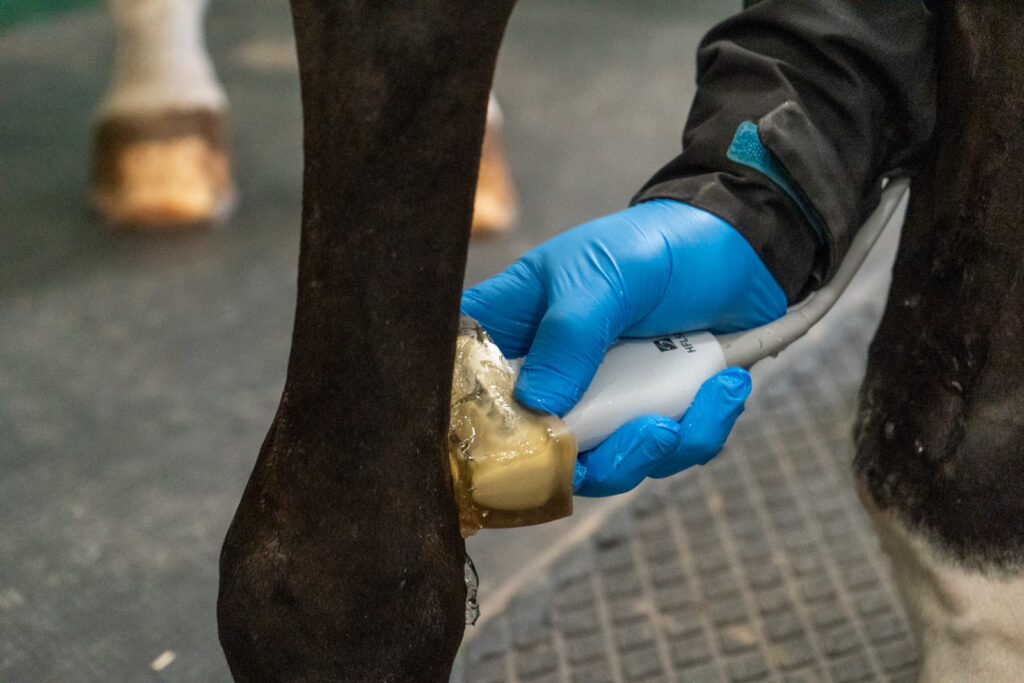
Stem cells can be used in the management of tendon injuries in horses, and are believed to produce a better quality repair, reducing re-injury rate.
Stem cells are available as a licensed medicine or, if this is not suitable for your horse, can be harvested from the horse’s bone marrow. The bone marrow tissue is sent to a specialist laboratory where the stem cells are selected and multiplied, before being returned to the vet.
The stem cells are then injected under ultrasound guidance into the site of injury.
PRP
Platelet rich plasma (PRP) is a biological treatment that may be useful for joint, tendon and ligament injuries.
Platelets are the small cells in blood responsible for clotting, but they are also a source of growth factors which may be helpful in encouraging healing of damaged structures.
PRP is prepared by taking a blood sample from the horse, and either centrifuging or filtering the blood to collect a small volume of PRP for injection into the injury site.
The injection is usually done under ultrasound guidance.
IRAP
Irap® is a biological treatment that can be used as an aid in the management of lameness caused by inflammation and/or degeneration within joints.
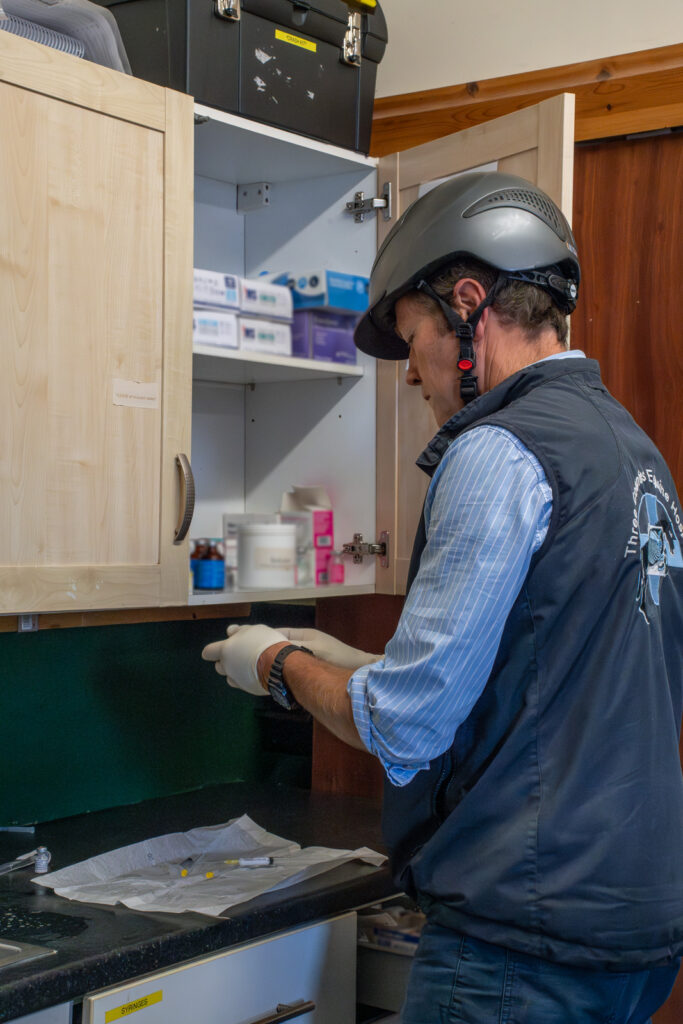
The technique involves the retrieval of the horse’s own blood using a special collecting syringe.
This undergoes special treatment in the laboratory (‘conditioning’) prior to retrieval of protein-rich serum, which is then injected back into the horse, usually on three or four occasions, at the site(s) of injury or disease.
A period of rest may be advised as appropriate. Since no prohibited substance is administered, there is no withdrawal period for competition.
Shockwave therapy (SWT)
Extracorporeal shockwave therapy has been in use in the human and equine sports fields for some time.
SWT is a non-invasive treatment in which a device is used to pass acoustic shock waves through the skin to the affected area. Used primarily for the treatment of lameness or back pain, the machine delivers a series of acoustic shocks focused on the site of pain or tissue damage, and this is usually repeated at seven to 10-day intervals, for up to three occasions.
The exact mechanism of its action at a cellular level is not clear.It is important that the right amount of focused energy is dissipated in the tissues under treatment, and the veterinary surgeon in charge of the case will determine the level of intensity and the duration required.
Horses usually require mild sedation to receive the treatment, as not only does the probe produce a rather ‘odd’ sensation at the time of application, but also there is a loud series of ‘clicks’ coming from the machine generating the pressure waves.
In some cases, it may be necessary to administer a nerve block to anaesthetise the area being treated, if the horse is particularly sensitive to the sensation.
It should be remembered that this therapy will be used only after a diagnosis has been reached, and that it will often be used in combination with other therapies.
The BHA and FEI authorities do not allow the use of SWT within seven days of a race or competition. This is to ensure that the system is not being used just to ‘mask’ pain immediately before competing.
If you wish to find out more about SWT, please do not hesitate to get in touch. One of our veterinary surgeons will be happy to discuss protocols, costs and applications with you.
Tildren, Equidronate and Osphos
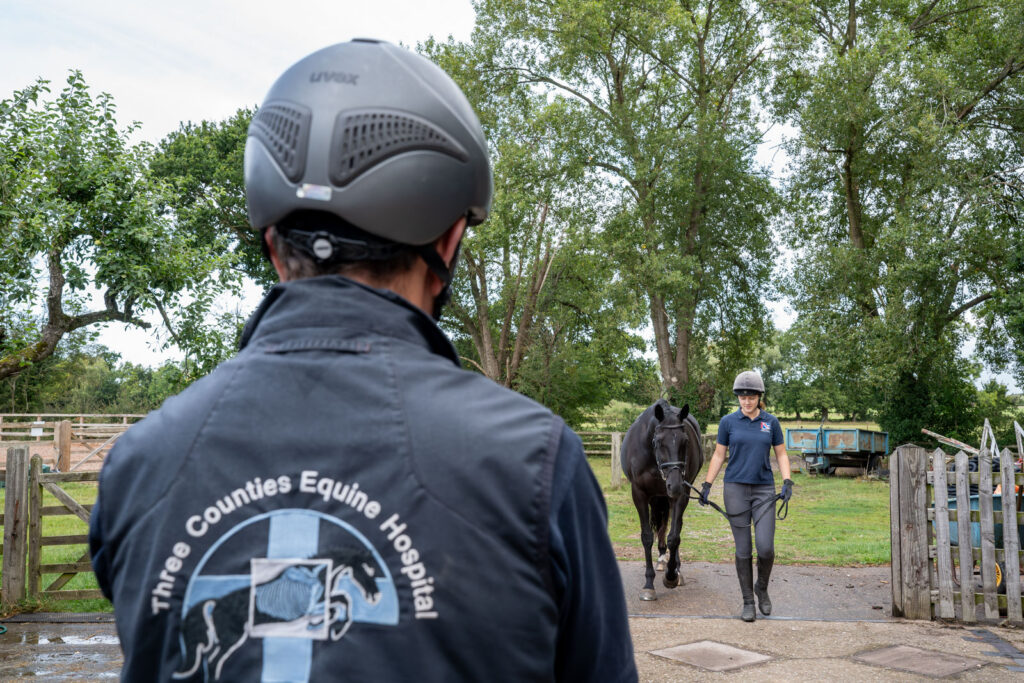
Equidronate and Tildren are licensed for the treatment of bone spavin (osteoarthritis of the small hock joints) and Osphos for navicular disease.
These medicines inhibit the process of bone resorption and breakdown, which may lead to the pain and lameness associated with these diseases.
If you think your horse may benefit from Equidronate or Osphos and would like to discuss this treatment with our team, please get in touch.
Joint medication
Lameness associated with joint injury is very common in horses, and we will often target the injured joints by direct injection with anti-inflammatories.
The most common anti-inflammatories used are corticosteroids and hyaluronic acid. PRP and IRAP can also be used in joints.
Because of the risk of introducing infection, the site of injection needs to be scrubbed thoroughly before injection. Some horses will need to be sedated for this procedure.
Neck, back and sacroiliac joint (SIJ) medication
Neck, back and SIJ pain is common in sports and leisure horses.
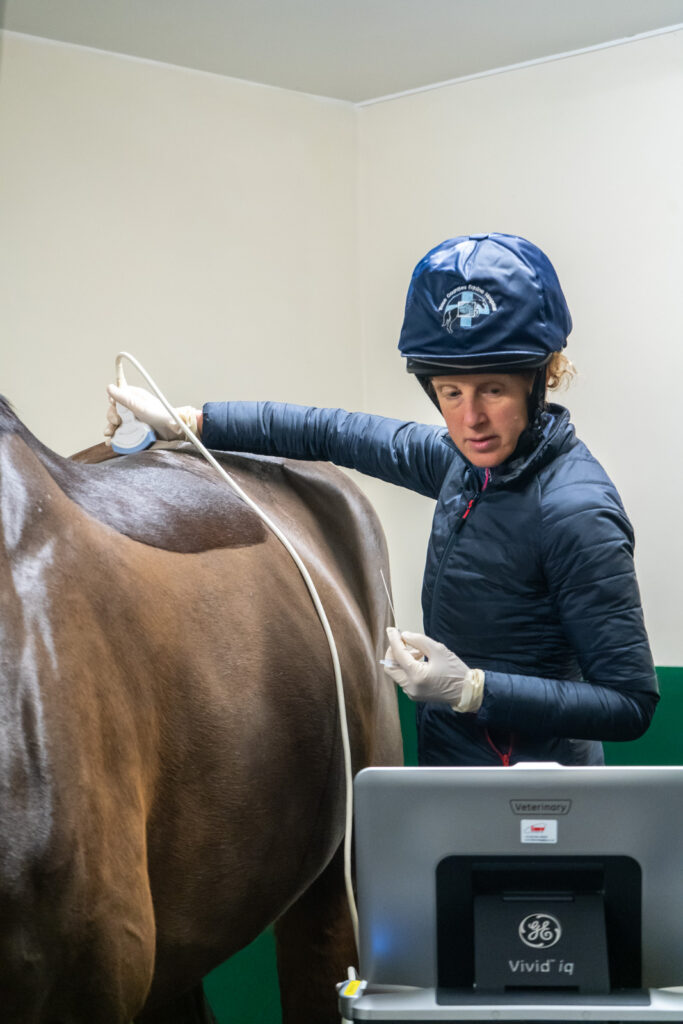
Once a diagnosis has been made we will often inject the injured areas with anti-inflammatories, and because we are often injecting deep structures, ultrasound guidance is used to direct these injections.
Other therapies such as physiotherapy, SWT and controlled exercise can be used in conjunction with this.
To learn more or book an appointment for your horses, please contact us on 01684 592099.
We are here to help
Reach out to our team with any questions or to arrange an appointment — we are always happy to hear from you.