
Vaccinations - Equine Influenza (Flu)
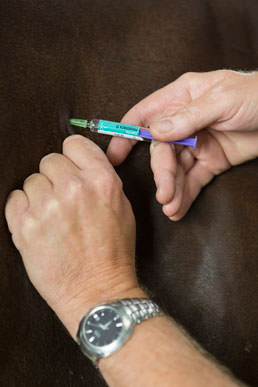
This very contagious viral respiratory infection will affect horses of all ages but particularly young animals. Whilst horses will usually recover from influenza this will take several weeks and they will often suffer secondary bacterial infections.
Vaccination is very effective, and the more horses that are vaccinated within the national herd, the slower the spread of the virus becomes in the face of an outbreak. Flu can spread significant distances by air so people need to see their horse not only as an individual, but also as a member of a much bigger herd.
The BHA guidelines for influenza vaccination (which many riding organisations also follow) are two vaccinations 21-60 days apart and a third at 120-180 days after the second, followed by boosters not more than 1 year apart.
Our recommendation for best immunity however is
- 1st Vaccination
- 2nd vaccination to be administered 21 - 60 days later
- 3rd vaccination to be administered 120 - 180 days after the second
- Annual booster vaccinations to be given no later than 1 year from the date of the last vaccine.
Vaccinations can start from 5 months of age and can be combined to cover tetanus too.
It is worth noting that many insurance companies stipulate that your horse has to be covered for influenza and tetanus otherwise your policy will be invalid.
Tetanus
Every horse should be vaccinated for tetanus as all horses are easily infected by this painful and fatal disease. Vaccination is extremely effective and is a fundamental part of horse healthcare.
Equine Herpes Virus (EHV 1,4)
EHV type 1 and type 4 are very contagious viruses that cause respiratory infections, neurological disease and abortion. Pregnant mares can be vaccinated during the 5, 7 and 9th months of pregnancy. Performance horses can be vaccinated to prevent respiratory infections (2 vaccinations 4-6 weeks apart followed by 6 monthly boosters).
Rotavirus
Rotavirus is a viral infection that causes diarrhoea in foals. While the diarrhoea is usually self-limiting, foals can lose considerable condition whilst infected. Vaccination of the mare in the 6, 8 and 10th months of pregnancy will provide antibodies to protect the foal. This is particularly useful on stud farms where rotavirus has occurred previously.
Worm Control
All horses will carry intestinal worm burdens from ingesting larvae from grass whilst grazing. These mostly cause health problems in young or debilitated animals. While each individual yard ought to have its own worm control programme based on management practices, we recommend the following as a guideline.
- Regular removal of droppings from pasture
- Rotational or strip grazing to ensure fresh pasture is grazed where possible
- Quarterly worm egg counts (WEC) to determine when worming is required
- A strategic annual treatment for cyathastomes and tapeworms.
The above approach is aimed at reducing reliance on worming products to which resistance is now common.
Foals are susceptible to worms and should be treated regularly from 6 weeks of age until approximately one year old, when they can be integrated into the adult horse programme.
As each yard will have its own individual requirements, it is best that you discuss a worming programme with one of our vets.
Please note that it is your responsibility to ensure that your horse's vaccinations are kept up to date. Three Counties Equine Hospital cannot be held responsible should a vaccination be allowed to lapse.